Heat transfer is commonly encountered in engineering systems and other aspects of life, and one does not need to go very far to see some application areas of heat transfer.
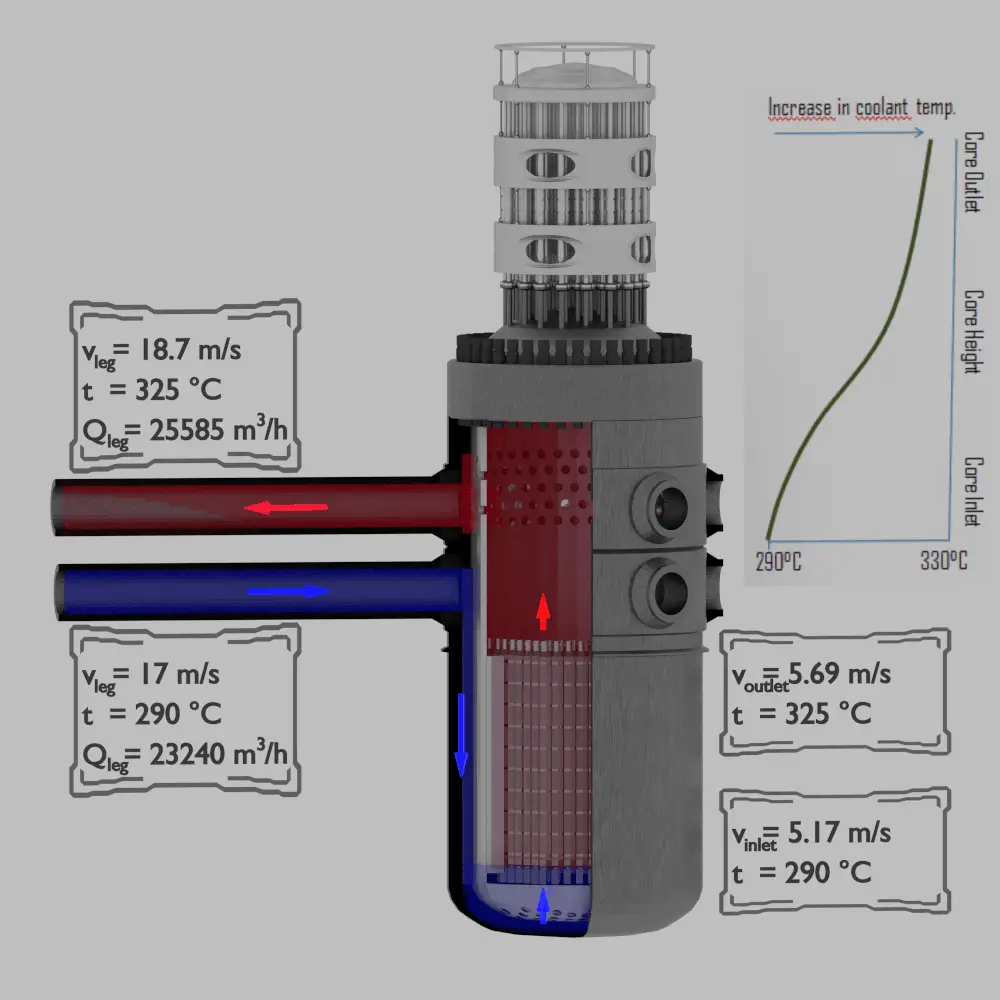
Detailed knowledge of heat transfer mechanisms is also essential for reactor engineers and all other engineers. A nuclear power plant (nuclear power station) looks like a standard thermal power station with one exception. The heat source in the nuclear power plant is a nuclear reactor. As is typical in all conventional thermal power stations, the heat is used to generate steam which drives a steam turbine connected to a generator that produces electricity. But in nuclear power plants, reactors produce an enormous amount of heat (energy) in a small volume. The density of the energy generation is very large, which puts demands on its heat transfer system (reactor coolant system). Therefore we have to start with the reactor heat generation and removal from the reactor.
For a reactor to operate in a steady-state, all of the heat released in the system must be removed as fast as it is produced. This is accomplished by passing a liquid or gaseous coolant through the core and through other regions where heat is generated. The heat transfer must be equal to or greater than the heat generation rate or overheating, and possible damage to the fuel may occur. The nature and operation of this coolant system are some of the most important considerations in designing a nuclear reactor.
It should be noted that from a strictly nuclear standpoint, there is theoretically no upper limit to the reactor thermal power, which can be attained by any critical reactor having sufficient excess of reactivity to overcome its negative temperature feedbacks. There is a direct proportionality between the neutron flux and the reactor thermal power in each nuclear reactor. The term thermal power is usually used because it means the rate at which heat is produced in the reactor core due to fissions in the fuel. Moreover, for a short period, a critical reactor does not need to have high excess of reactivity as in the case of rapid reactivity excursions.
In short, almost any reactor can exceed the ability of heat removal of its coolant system. Beyond this point, the fuel would heat up and reach very high temperatures. This situation must be avoided by reactor operators and by reactor safety systems. The heat generation – heat removal rate balance must be maintained to prevent these temperatures that might fail fuel or other structural materials. In reactor engineering, the thermal-hydraulics of nuclear reactors describe the effort involving the coupling of heat transfer and fluid dynamics to accomplish the desired heat removal rate from the core under both normal operation and accident conditions.